12 Creative Ways to Get Startup Funding and Raise Money in 2025
Funding is often one of the biggest hurdles for aspiring entrepreneurs, especially when you’re just getting started. Understanding the different stages of startup funding is critical to navigating…
Funding is a major hurdle for aspiring entrepreneurs: Learn all startup funding stages
Funding is often one of the biggest hurdles for aspiring entrepreneurs, especially when you’re just getting started. Understanding the different stages of startup funding is critical to navigating this challenge successfully. Whether you’re seeking seed capital to get your idea off the ground or aiming for a Series A round to scale your product, knowing which type of funding is appropriate at each stage can make or break your business.
For instance, early-stage funding often involves bootstrapping, angel investors, or seeking seed capital, where the focus is on building your MVP and proving market fit. Having a solid business plan is essential in these stages, as it showcases your vision, growth potential, and revenue model to potential investors. Additionally, leveraging business credit can help you secure loans or favorable investment terms, providing much-needed capital to fuel growth.
As you grow, a Series A round might be the next step, allowing you to raise larger amounts to scale your operations, invest in customer acquisition, and expand your team. Knowing the nuances of each funding phase will help you approach the right investors and secure the capital you need to succeed.
How Can I Fund a Startup with No Money?
Starting a business with little to no capital can be challenging, but it’s far from impossible. Many successful startups have thrived by leveraging creativity, resourcefulness, and strategic partnerships rather than large initial investments. If you’re looking to get your idea off the ground without significant funding, there are plenty of options to explore.
Here are the key funding stages for startups, along with typical round amounts:
- Pre-Seed Funding (€10K - €250K): This is the earliest stage where funding usually comes from the founders, friends, and family. It’s focused on validating your idea and creating a minimum viable product (MVP).
- Seed Funding (€250K - €2M): Often provided by angel investors or early-stage venture capital (VC) firms, seed funding helps build the product, gain initial traction, and establish market fit.
- Series A (€2M - €15M): In this round, the focus is on scaling the business. Investors look for companies with proven market traction and a strong revenue model. Funding is typically used for marketing, product development, and expanding the team.
- Series B (€15M - €50M): This round aims to scale the business further and establish market leadership. Companies use these funds to expand into new markets, develop advanced product features, and increase customer acquisition efforts.
- Series C (€50M+): At this stage, companies are usually well-established and seeking capital for large-scale expansion, such as international growth, acquisitions, or entering new verticals.
- Initial Public Offering (IPO) or Exit (€100M+): The final stage for many startups involves going public or seeking an acquisition. This stage provides liquidity to the founders and investors and marks a significant milestone in the startup’s journey.
Understanding these stages will help you plan your fundraising strategy effectively and approach the right investors at the right time.
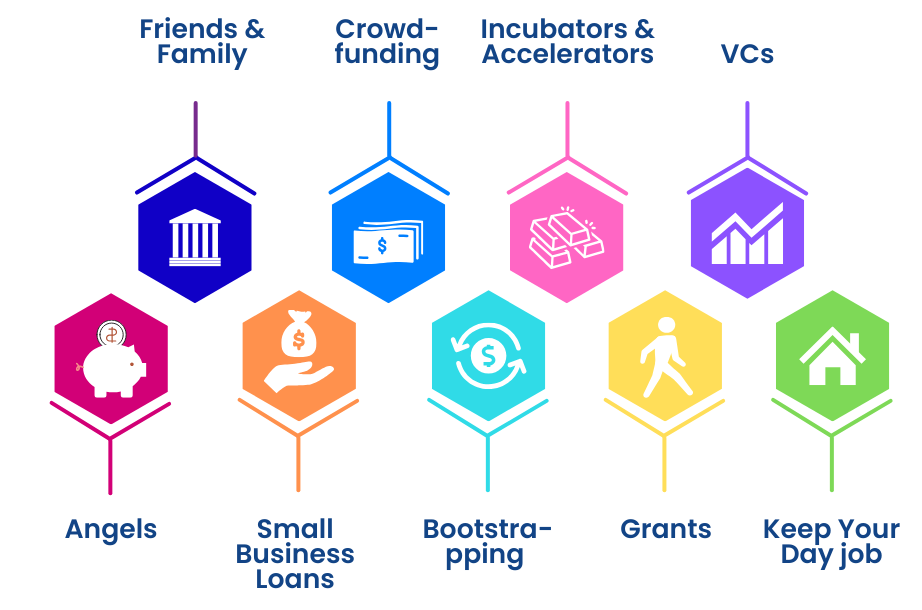
12 Ways to Get Startup Funding
In the following section, we’ll cover 12 creative ways to raise money for your startup in 2025. These methods cater to different stages of the funding journey, from pre-seed to Series A rounds, and highlight what works best at each stage while pointing out potential pitfalls. Whether you opt for traditional venture capital or innovative crowdfunding campaigns, you’ll find a variety of approaches to help fuel your startup’s growth.
1. Friends and Family as Angel Investors: Funding Options Close to Home
Borrowing from friends and fBorrowing startup capital from friends and family remains a classic option. They often believe in your vision even before you have the metrics to prove it. If you’re considering this route to get funding, approach it with a professional mindset. Draft agreements, set clear terms, and ensure both parties receive sound legal advice if it’s a loan.
- Benefits: Family and friends are often more willing to take a risk on you than banks or investors.
- Watch Out: Money can strain personal relationships. Keep communication open, and consider taking only what you genuinely need to launch.

2. Small Business Loans: Traditional Yet Effective Startup Funding Lender
Many banks and credit unions offer small business loans, although they tend to be cautious about lending to new businesses without a track record. If your credit score is solid, you may have better luck with alternative lending companies, though you’ll need to vet them carefully.
- Benefits: Business loans give you access to capital without losing equity in your business.
- Watch Out: Some alternative lenders have high interest rates or unfavorable terms. Research your options carefully before signing.
3. Trade Equity or Services: Barter Your Way to Success
Need a website, logo, or marketing help? Many entrepreneurs start by trading their skills or equity with other small business owners. Joining local startup groups or online communities can help you find people willing to exchange services, letting you build your business without spending cash.
- Benefits: You can save money and connect with other entrepreneurs.
- Watch Out: Trading services is a commitment, and not everyone will say yes. Start small, and make sure any partnerships are win-win.
4. Bootstrapping: Building from the Ground Up
Bootstrapping means using your own money to fund your business. This might include dipping into savings, using credit cards wisely, or taking a low-interest line of credit. When you bootstrap, you have complete control of your business but assume all the financial risks.
- Benefits: You maintain full ownership and control, and you build financial discipline from day one.
- Watch Out: If the business doesn’t succeed, you could end up with significant personal debt. Start with a financial health check and budget for worst-case scenarios.
5. Business Incubators and Accelerators: Kickstart with Expert Support
Accelerators and incubators are found all over the world, especially in cities with strong business ecosystems. These programs provide startups with office space, mentorship, and access to a community of experienced entrepreneurs, and often culminate in a pitch day for investors.
- Benefits: In addition to funding, you gain mentorship, industry connections, and community support.
- Watch Out: Many programs are tech-focused, so non-tech businesses might find limited opportunities. Apply only if you align with the incubator’s goals and values.
6. Crowdfunding: Leveraging Community Support and Securing Startup Funding
Crowdfunding has changed the way businesses get started. Platforms like Kickstarter, Indiegogo, and GoFundMe allow you to raise money while also creating brand awareness. A compelling story and effective social media strategy are key to standing out from the crowd.
- Benefits: You gain both funding and a built-in customer base who believe in your product.
- Watch Out: Crowdfunding can be highly competitive, and it takes serious marketing to break through. Have a clear plan for fulfilling rewards and communicating with backers.
7. Small Business Grants: Funding You Don’t Have to Repay
Grants are ideal for securing funding because they don’t require repayment, but they are highly competitive and often come with specific requirements. Many organizations, including the Small Business Administration (SBA), offer grants to businesses led by women, minorities, or veterans, as well as those operating in certain industries.
- Benefits: Grants provide funding without sacrificing equity or taking on debt.
- Watch Out: Some grants have strict stipulations and reporting requirements, so make sure you understand the terms fully before applying.
8. Local Contests: Competing for Capital and Business Funding
While shows like Shark Tank have popularized pitch competitions, local chambers of commerce and business associations often hold similar contests. They offer funding to startups with strong ideas, and you’ll gain exposure in your local business community.
- Benefits: You get practice pitching, receive valuable feedback, and potentially win cash or resources to help grow your business.
- Watch Out: It can be time-consuming to prepare, and there’s no guarantee you’ll win. Treat it as an opportunity to improve your pitch and increase awareness of your startup.
9. Keep Your Day Job: Funding Stability Before You Raise Capital
It’s tempting to dive into your new venture full-time, but keeping your day job provides a stable income, allowing you to take fewer financial risks and grow your business at a sustainable pace. Balancing both can be challenging but can also build resilience and discipline.
- Benefits: Financial security can reduce stress and let you focus on long-term goals.
- Watch Out: Balancing a job and a startup means time is tight, and you may miss some opportunities. Set a timeline for when you’ll transition fully to the business.
10. Connect with a Startup Consultant to Supercharge Your Growth
If you want to fast-track your startup, working with an experienced consultant like Palmgren Angels can be a game-changer. Founded by entrepreneurs who have successfully scaled and exited multiple startups, Palmgren Angels offers hands-on support in everything from Product-Led Growth (PLG) strategy to Go-To-Market (GTM) execution. Their consultants bring extensive industry knowledge and can connect you with their network of angel investors when you’re ready to raise capital.
- Benefits: You gain access to experts who have been through the process, along with introductions to potential investors.
- Watch Out: Consultant fees vary, so ensure the services align with your goals and budget. A quality consultant can be worth every penny if they help you reach significant milestones faster.
Pro Tip: Consultants like Palmgren Angels are ideal for early to mid-stage startups, particularly those who want operational expertise and a clear path to scale.
11. Study and Learn as Much as You Can: Knowledge is Power
Starting a business is complex, and ongoing learning is critical for success. Dive into courses, webinars, and books to stay informed about the latest trends and best practices. For a practical guide on building and scaling your startup, check out our Go-To-Market (GTM) Strategy Guide.
Benefits: By continuously learning, you become a more resilient and informed founder, better equipped to navigate the ups and downs of entrepreneurship.
Watch Out: Information overload can be overwhelming. Prioritize quality resources that align with your goals.
2025 Learning Focus: Look for courses on Product-Led Growth, sales strategy, and lean startup methodologies. These are essential skills for building a scalable and sustainable business in today’s competitive landscape.
12. Pitch Your Idea as Often as Possible: Practice Makes Perfect
As a startup founder, pitching isn’t a one-time event; it’s a skill you’ll need throughout your journey. Aim to pitch your idea to a variety of investors, companies, and consultants, especially those who work hands-on with startups, like Palmgren Angels. Frequent pitching helps you refine your message, build confidence, and gather valuable feedback.
- Benefits: Repeated pitching builds relationships with potential investors and advisors and helps you perfect your story.
- Watch Out: Be open to feedback, even when it’s critical. Each pitch should be an opportunity to improve and learn.

Understanding Venture Capital (VC) Funding
Venture capital (VC) is a crucial source of funding for startups looking to scale rapidly. VC firms invest in early-stage companies with high growth potential, providing not just capital but also strategic support, mentorship, and industry connections. The goal of VCs is to help startups grow quickly, increase their market share, and ultimately achieve a significant exit through acquisition or IPO.
What Venture Capitalists Look For:
- Scalable Business Model: VCs seek startups that can grow exponentially, not just linearly. They are particularly interested in SaaS companies, tech startups, and businesses with innovative products or disruptive technologies.
- Strong Founding Team: The founders’ experience, vision, and execution capabilities play a major role in attracting VC interest. VCs prefer teams with a proven track record or deep industry expertise.
- Product-Market Fit: Before securing VC funding, your startup should demonstrate a strong product-market fit. This means having a product that meets a significant demand in the market, with clear evidence of customer interest and traction.
- Revenue Growth and Traction: VCs typically invest in startups that have already shown promising growth in terms of revenue, customer acquisition, or market share. The stronger your metrics, the more likely you are to secure a larger investment.
VC Funding Stages:
Venture capital funding typically aligns with the startup funding stages mentioned earlier:
- Seed Funding: Often the first round of VC investment, seed funding helps startups build their product and gain initial market traction.
- Series A: VCs invest to help startups scale their operations, focus on customer acquisition, and build a sustainable revenue model.
- Series B and Beyond: These rounds involve larger investments to help the company dominate the market, enter new territories, and accelerate growth. VCs play a significant role in guiding strategic decisions at this stage.
Pros of VC Funding:
- Access to Significant Capital: VCs provide substantial financial resources, often larger than what you could obtain through angel investors or crowdfunding.
- Expertise and Mentorship: VCs bring valuable industry experience, mentorship, and strategic advice that can help steer your startup toward growth.
- Network and Connections: VC firms often have extensive networks that can open doors to potential partners, customers, and future investors.
Cons of VC Funding:
- Equity Dilution: In exchange for capital, VCs take a percentage of equity in your company, which can dilute the ownership stakes of the founders.
- High Expectations: VCs typically expect aggressive growth and a clear path to exit (acquisition or IPO). This pressure can sometimes lead to intense work demands and strategic pivots.
- Loss of Control: Accepting VC funding often comes with strings attached, such as board seats and decision-making influence, which may affect the founders’ control over the company.
Overall, venture capital funding can be a powerful tool to help your startup scale quickly, but it’s essential to weigh the pros and cons before deciding if it’s the right path for your business. If you choose to pursue VC funding, be prepared to pitch your vision, prove your product-market fit, and show how your startup can generate a substantial return on investment.
Choosing the Right Path for You
Raising funds for your startup is about more than just money, it’s about connecting with the right people, building essential skills, and communicating your vision effectively. Explore different options, prioritize continuous learning, and be prepared to pitch your idea with clarity and conviction.
Final Thoughts
Building a business is challenging but incredibly rewarding. Surround yourself with mentors, take advantage of every learning opportunity, and refine your pitch to attract investors who believe in your vision. Each step is part of the journey toward turning your idea into a successful venture.
Note: Always consult financial and legal advisors to ensure you’re making the best decisions for your startup.